
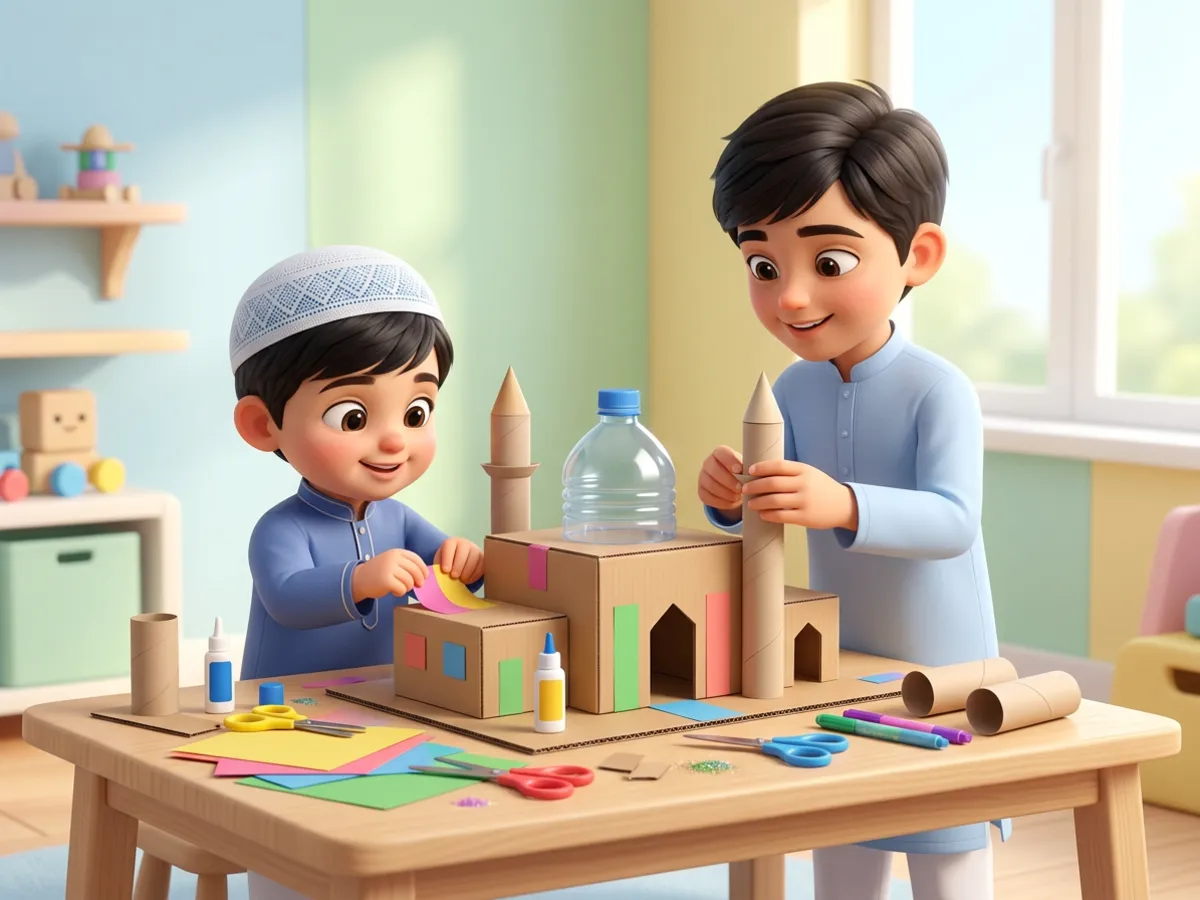

The Problem: Craft supplies cost too much? Or your child gets bored of a new toy in 2 days?
Why It Happens: Store craft kits come ready-made. You just join the parts. There is no room to think! The child finishes in 20 minutes and gets bored, because they did not invent anything themselves.
The Solution: Build from trash! Before you throw that cereal box, stop. For your child, it is not trash. It is a castle! Below are 8 projects I tried myself with kids. All free, all fun, and each hides a secret lesson.

Why Is Your Child Happier With Things They Make?
Problem: “I bought an expensive toy, and they broke it in 2 days!”
Why it happens: Because a ready-made thing does not touch the child’s heart. But the thing they made themselves — crooked or straight — becomes dear to them. This is human nature: we value what we worked hard for.
How to fix it: Do not give the finished thing. Give the making supplies. Give trash, tape, colors — and step back. What gets made will be the child’s own.
💡 Pro Tip: Praise what the child made — even if it is crooked. “You made this yourself? Amazing!” This line will lift their confidence to the sky.
8 Projects — Trash to Treasure
1. Cardboard City — “This Is My City!”
Problem this solves: Your child says “I have nothing to play with”?
Things needed: Cardboard boxes (shoe boxes, delivery boxes), colors, tape.
How to make: Each box is a building. Paint windows and doors, stack them to make a city, draw paper roads in between. Toy cars will drive through. Join tunnels with tape. Over days, this can grow into an epic city!
💡 Pro Tip: Let the child name the city — “Ahmedabad” or “Super City”! Naming doubles the love.
2. Bottle Cap Mosaic — “I Made This!”
Problem this solves: Your child cannot tell colors apart? Their hands shake in fine work?
Things needed: Plastic bottle caps (washed), cardboard, glue.
How to make: Sort caps by color, then glue them on cardboard to make pictures — flowers, fish, rainbows. The 3D texture looks lovely, and sorting colors is math practice too. Collect caps for a week, then start!
💡 Pro Tip: Keep a “treasure box” for collecting caps. The child will collect themselves and learn responsibility too!
3. Newspaper Animals — “Look at My Zebra!”
Problem this solves: Your child’s fingers feel weak? They cannot hold scissors well?
Things needed: Old newspapers, glue, big paper, colors.
How to make: Tear the newspaper (do not cut — tearing is better for small hands!), then glue pieces to make animals: a striped zebra, a fluffy sheep, a scaly fish. Add details with colors. Tearing makes hands strong for writing.
💡 Pro Tip: Take a photo of the child’s animal and send it to grandparents. When they praise, the child’s confidence grows!
4. Egg Tray Caterpillar — “How Cute Is This!”
Problem this solves: You have a small child (3-4 years) who cannot do a big project?
Things needed: Cardboard egg tray, colors, eyes (googly or drawn), pipe cleaners.
How to make: Cut the tray into a strip, paint each part a different color, add eyes and antennae. Join many rows — a caterpillar family! A classic for ages 3-6. It never fails.
💡 Pro Tip: Give the caterpillar a name and make up its “story.” The child will play with it every day!
5. Toilet Roll Animals — “My Own Zoo!”
Problem this solves: Your child does not know animal names? Or they want to visit the zoo but there is no time?
Things needed: Empty toilet rolls, colored paper, glue, markers.
How to make: Wrap colored paper on the roll: fold the top for cat ears, add wings for an owl, add fins for a fish. Make a whole zoo! These are strong — not just for show, but for real play too.
💡 Pro Tip: Tell one fact about each animal: “An owl sees at night!” Learning through play!
6. Tin Can Planters — “My Mint Is Growing!”
Problem this solves: Your child does not understand responsibility? They forget to water plants?
Things needed: Clean tin cans (smooth the edges!), colors, soil, seeds.
How to make: Paint the cans, fill with soil, plant mint, coriander, or flowers. The child waters daily — art plus responsibility! An adult should help with the edges — safety first.
💡 Pro Tip: When the mint grows, use it in food: “This is chutney from YOUR mint!” The child will go wild with joy.
7. Magazine Jewelry — “How Beautiful Is This!”
Problem this solves: You have an older girl (7+ years) who feels bored of “baby” crafts?
Things needed: Old magazines, glue, string, pencil.
How to make: Cut long triangles from colorful pages, roll them tight on a pencil, glue the tip — beautiful beads are ready! Make necklaces and bracelets. Girls aged 7+ love this. The beads really look beautiful.
💡 Pro Tip: Gift them to grandma on Eid. A handmade gift wins hearts!
8. Trash Robot — “No Rules, Only Imagination!”
Problem this solves: Your child asks “the right way” for everything? They feel scared to think on their own?
Things needed: Any clean trash — boxes, bottles, caps, foil, pipes.
How to make: Give a challenge: “Make a robot!” No instructions — only tape, glue, and imagination. Every robot will be totally unique. Put up a show. Kids will talk about it for weeks!
💡 Pro Tip: Name the robot and tell its “power”: “My robot can walk in water!” Storytelling plus creativity.
How to Craft Without the Mess? (5 Tips)
- Prep the area: Cover the table or floor with old newspaper or a plastic sheet. Furniture stays safe, and so does your mind.
- Old clothes: Wear old clothes or an apron. For small kids, use only washable colors.
- “Creation station”: Keep a box where you collect interesting trash all week. Craft day is always ready!
- Focus on the process, not the result: The child’s crooked robot is better than your perfect craft. Do not fix their work!
- Display with pride: Put finished art on a shelf or the fridge. The child will feel their creativity is precious.
Frequently Asked Questions
Is trash craft safe for kids?
Yes, with care: wash food boxes, smooth sharp edges (or an adult handles them), skip chemical items, and watch small kids. When in doubt, stick to paper, cardboard, and clean plastic.
What ages are these good for?
Most work for ages 3-10. Toddlers (2-3) can tear and glue (with help). Ages 4-6 will love the animals. Ages 7+ will love the jewelry and robots. Watch the child’s interest more than the age — that is the real measure.
Where do I keep all these crafts? My home is full!
Every crafter’s problem! Keep a “gallery shelf” for current favorites. For the rest, take a photo and then recycle (kids agree if they see the photo). Let them keep one special thing long-term. Making is the real value — not keeping.
Does recycled craft really build care for nature?
More than lectures! When a child turns a “useless” box into something lovely, the idea sits deep inside them that trash has value. Add easy talks (“where does trash go?”) and the habit of sorting recyclables. You are happily raising an eco-friendly child.